SweetDeep
Real-time type 2 diabetes detection with a smartwatch, evaluated on real-world data from a decentralized clinical trial with AP-HP.
Clinically validated — 4 studies, 3 continents
- Indication
- Type 2 diabetes risk screening
- Data source
- Multi-sensor wearables (ECG, PPG, BP, BIA, SpO2, skin temperature, motion, activity, sleep) + lifestyle questionnaire
- Collaborators
- Samsung, AP-HP (Paris), CHSF (Centre Hospitalier Sud Francilien), Hackensack Meridian Health, Jersey Shore University Medical Center, CIC Clinical Research Center & Burjeel Hospitals Network (MENA), Princeton University
- Partnership availability
- Ready for strategic pilots and commercial discussions — wellness launch path with Samsung; clinical expansion path with pharma/medical device partners
The problem
More than 1.3 billion adults worldwide are metabolically unhealthy — and roughly half are unaware of their risk. Metabolic disease progresses silently: from glucose dysregulation through insulin resistance and vascular damage to organ damage and chronic disease, with symptoms typically surfacing only after irreversible harm has begun. The cost is not silent: US diabetes spending is projected to reach $662 billion annually by 2030. Screening today depends on blood tests and clinic visits — barriers that fall hardest on the populations at greatest risk.
Our approach
SweetDeep™ is the first commercial application of NeuTigers' Wearable-AI™ metabolic intelligence. Multi-sensor wearable data — ECG, PPG, blood pressure, BIA, SpO2, skin temperature, motion, activity and sleep, alongside a lifestyle questionnaire — feeds an on-device AI engine of proprietary, edge-optimized deep learning built on the StarDeep platform. The engine transforms physiological signals into digital biomarkers, produces a diabetes risk prediction, and turns it into personalized, actionable insights that support early action and prevention.
The result is 100% non-invasive screening — no blood draw — that is low cost (a single device people already own), seamless, and engaging enough to fit daily life.
Clinical validation
In clinical evaluation, SweetDeep outperforms standard questionnaire-based risk screening (FINDRISC) with a stronger balance of sensitivity and specificity. By combining wearable physiology with AI, it identifies at-risk individuals earlier and enables more efficient referral to confirmatory laboratory testing.
Validation spans 4 prospective clinical studies across 3 continents (US, EU and MENA), conducted with hospital and clinical-research partners including AP-HP (Paris), CHSF, Hackensack Meridian Health, Jersey Shore University Medical Center, and the CIC Clinical Research Center & Burjeel Hospitals Network.
Daily experience
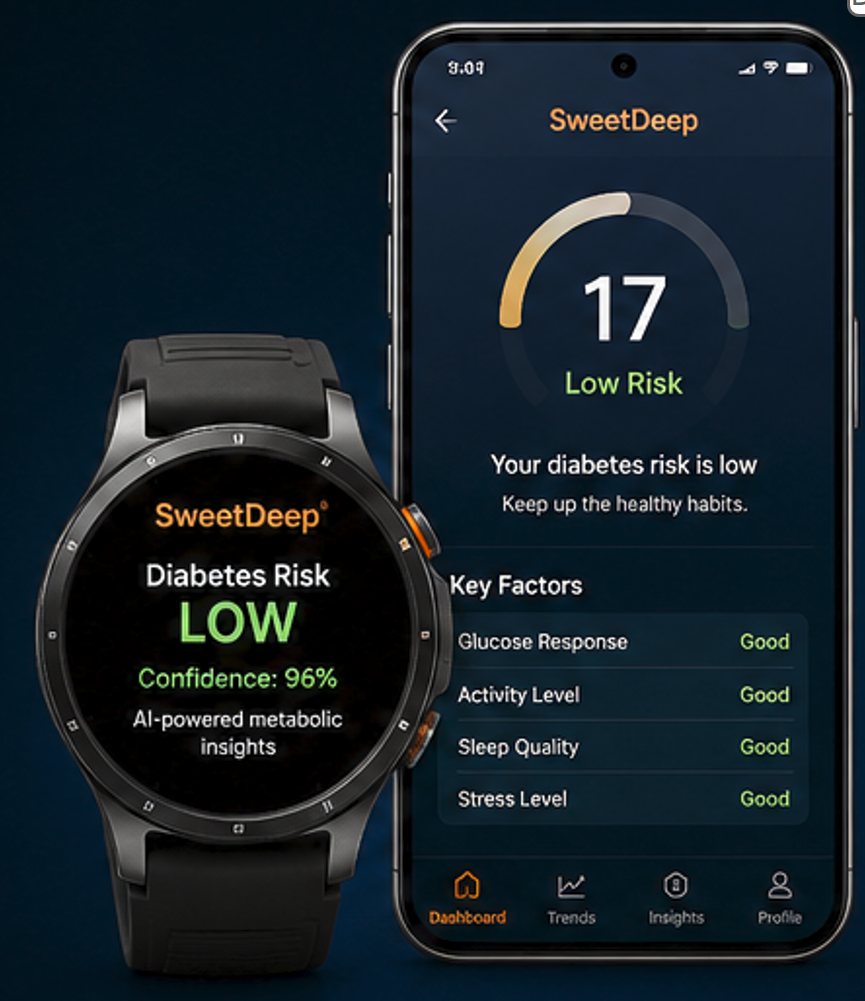
SweetDeep works in free-living conditions, day after day: the watch collects sensor data as users go about their lives, applies on-device data quality control and edge-AI inference, and delivers insights at the point of use. Personal recommendations based on each individual's patterns and trends drive engagement and behavior change — the lever that actually lowers type 2 diabetes risk.
Current status
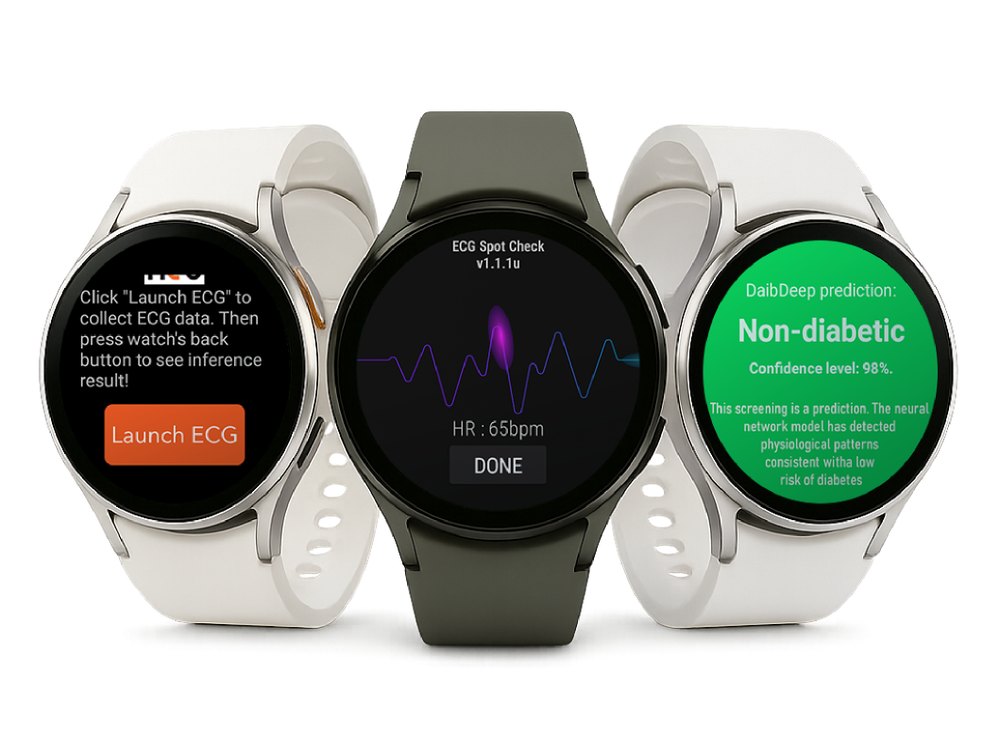
A proof-of-concept with Samsung on the Galaxy Watch has been successfully completed, and SweetDeep prototype apps are available on Android and Wear OS. The program is ready for strategic pilots and commercial discussions with partners. This status describes the program's evidence and product stage; it does not imply regulatory clearance, approval or diagnostic status in any jurisdiction.
Collaboration need
We are ready to engage in strategic pilots and commercial discussions — with wellness and device partners on the near-term launch path, and with pharma and medical-device partners on clinical expansion. Partner with us.
Evidence
- SweetDeep — real-time type 2 diabetes detection with a smartwatch (arXiv, 2026) — Data collected in real-world conditions in a decentralized clinical trial with AP-HP.
- Clinical validation across 4 studies on 3 continents (US/EU/MENA)
- Samsung Galaxy Watch proof-of-concept completed; prototype apps on Android and Wear OS
Program status reflects the stage stated above; it does not imply regulatory clearance, diagnostic availability, or commercial deployment unless explicitly stated.